Memento - AI Assisted Knowledge Dokumentation
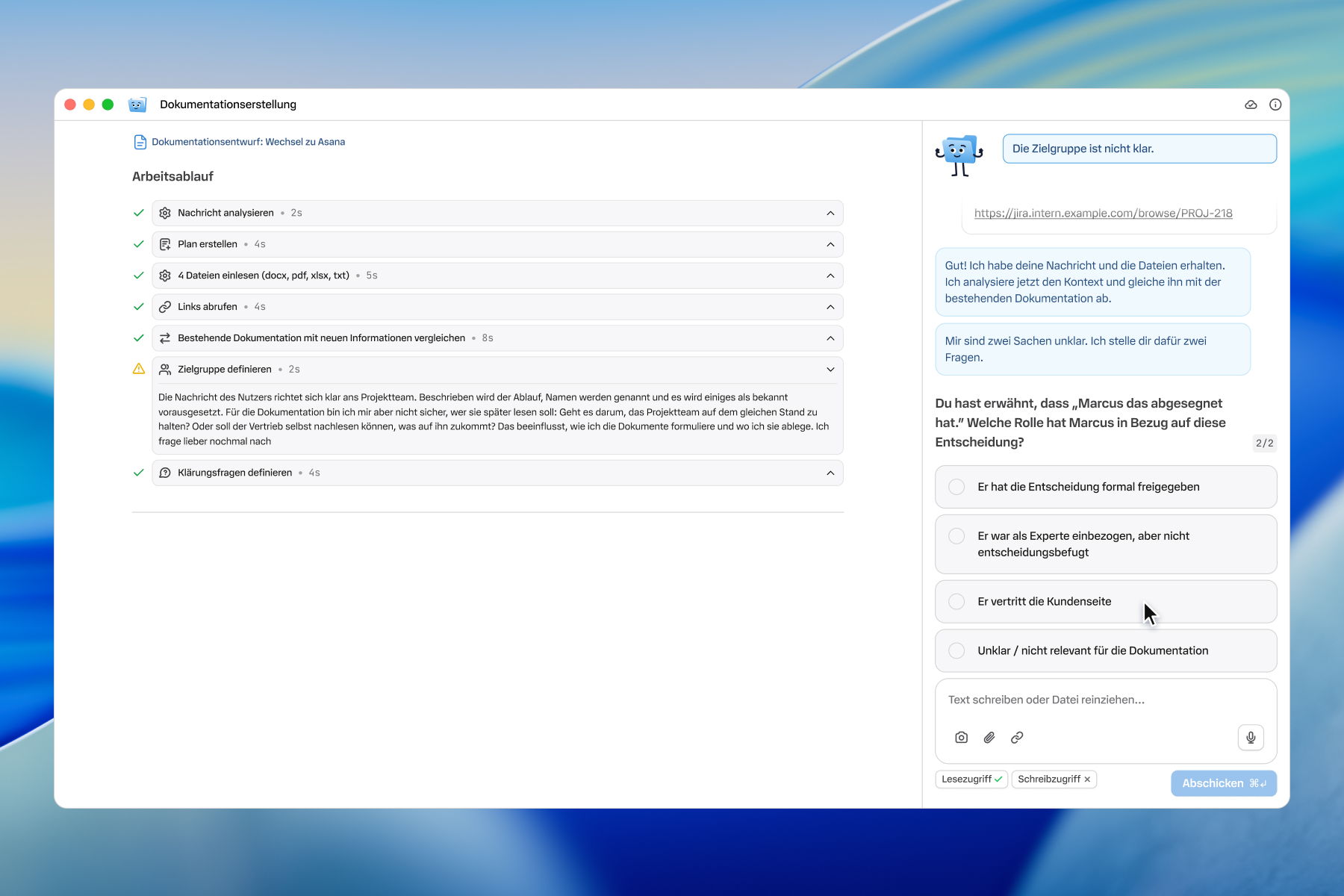
Everyone agrees documentation matters, yet it almost never gets prioritized. For my Master's thesis at Rheinische Hochschule Köln (February to July 2026), I designed Memento, from the first interviews to a tested prototype. Memento is an AI-powered desktop assistant that does the writing, while users decide what goes into the knowledge base. In usability testing, it reached a SUS score of 92.
Starting Point and Challenge
Knowledge is one of a company's most important resources, yet it rarely gets written down. There's no time, documenting is tedious, and the payoff only shows up later. AI can take over the writing, but it brings its own risks: hallucinations and errors accepted without review degrade the knowledge base.
My guiding question: How should an AI-powered application be designed to make documentation easier without handing quality control over to the AI?
Process
I interviewed four users from software development and consulting, plus three experts in knowledge management, AI and UX. The clearest pattern: people only document what takes almost no effort and can be captured where the knowledge is created. And they only trust AI output if they can review it.
From this, I derived six design principles. Two of them shaped the concept most.
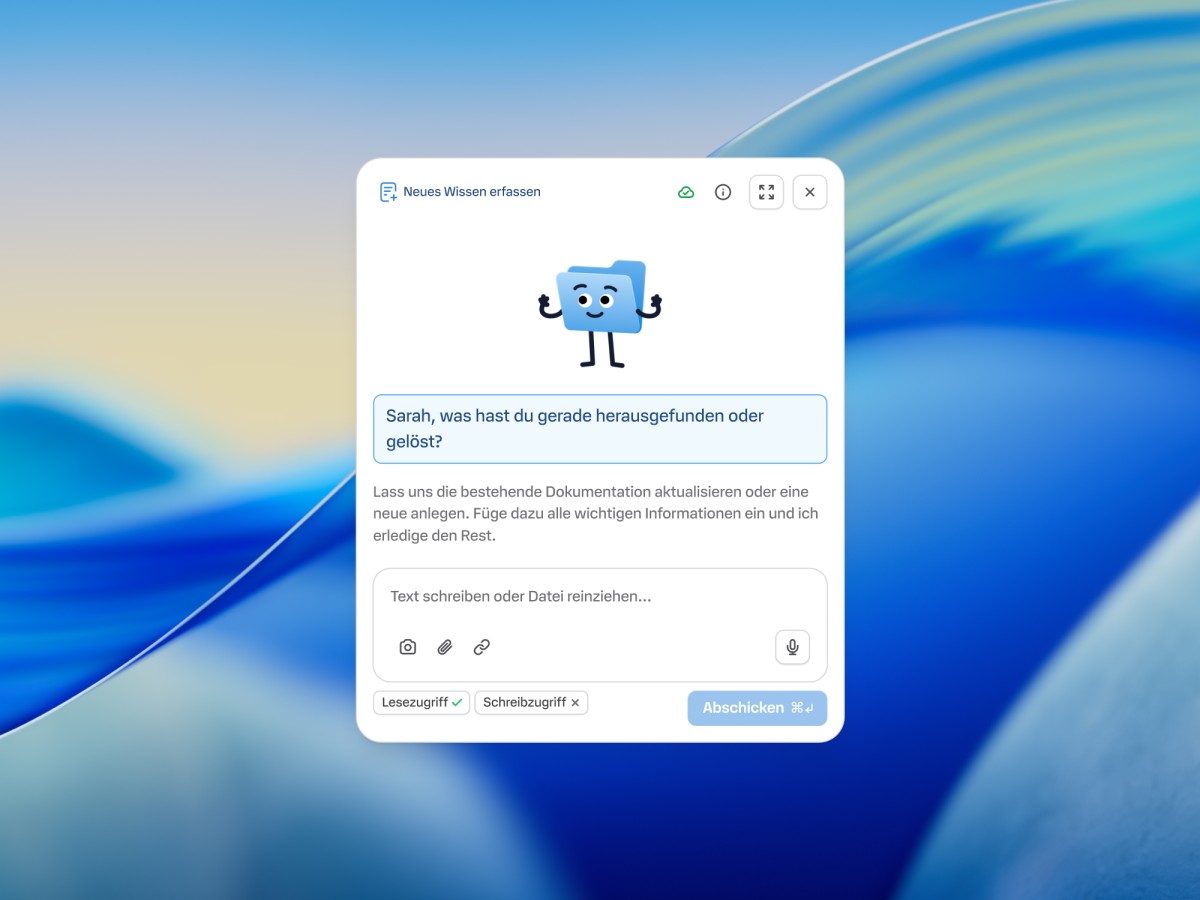
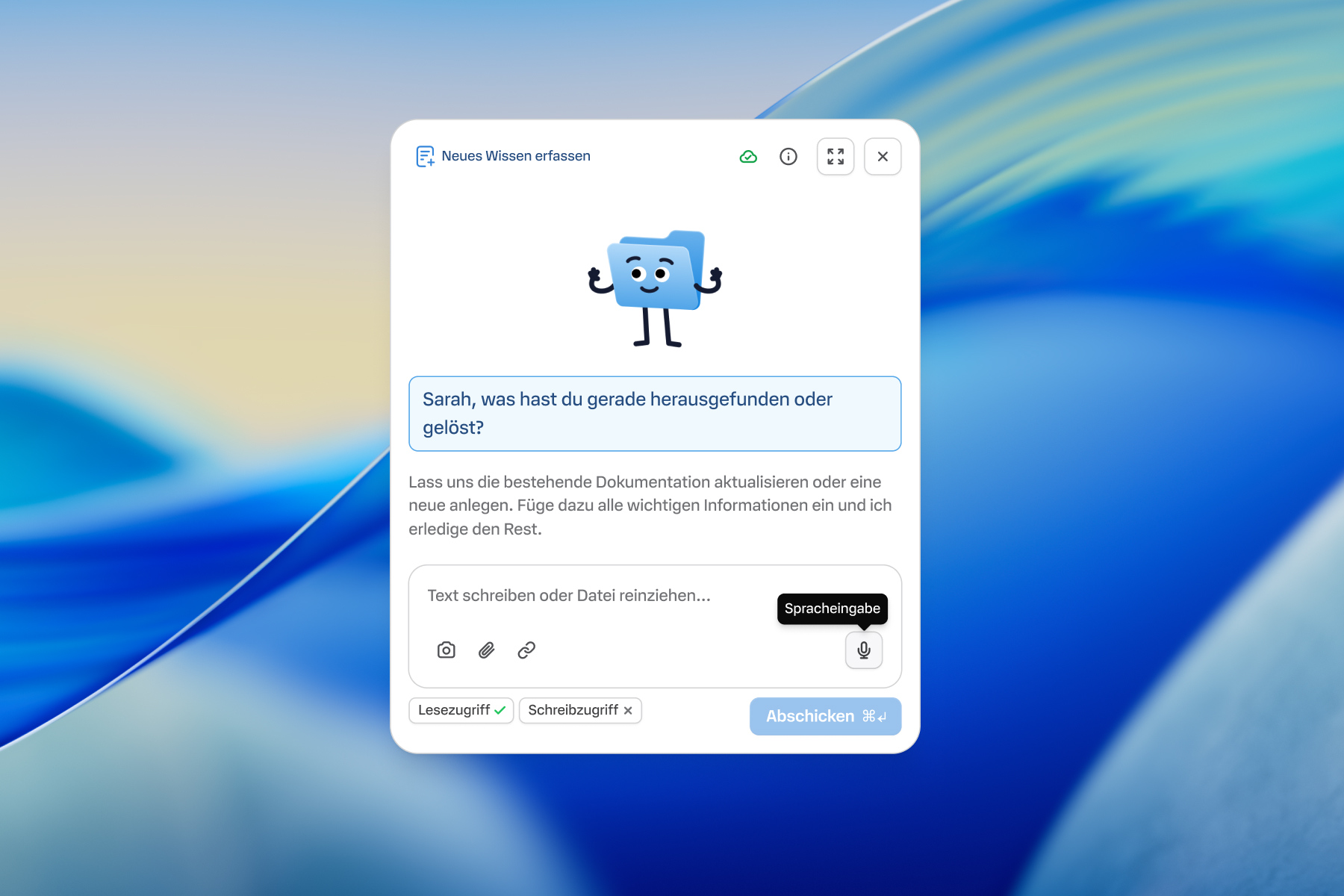
Capture knowledge where it's created. This principle decided the platform. I briefly considered a web app but ruled it out, because only a native desktop app can be reached via a global shortcut and as an overlay on top of other programs. That way, knowledge can be captured right after a meeting or a closed ticket.
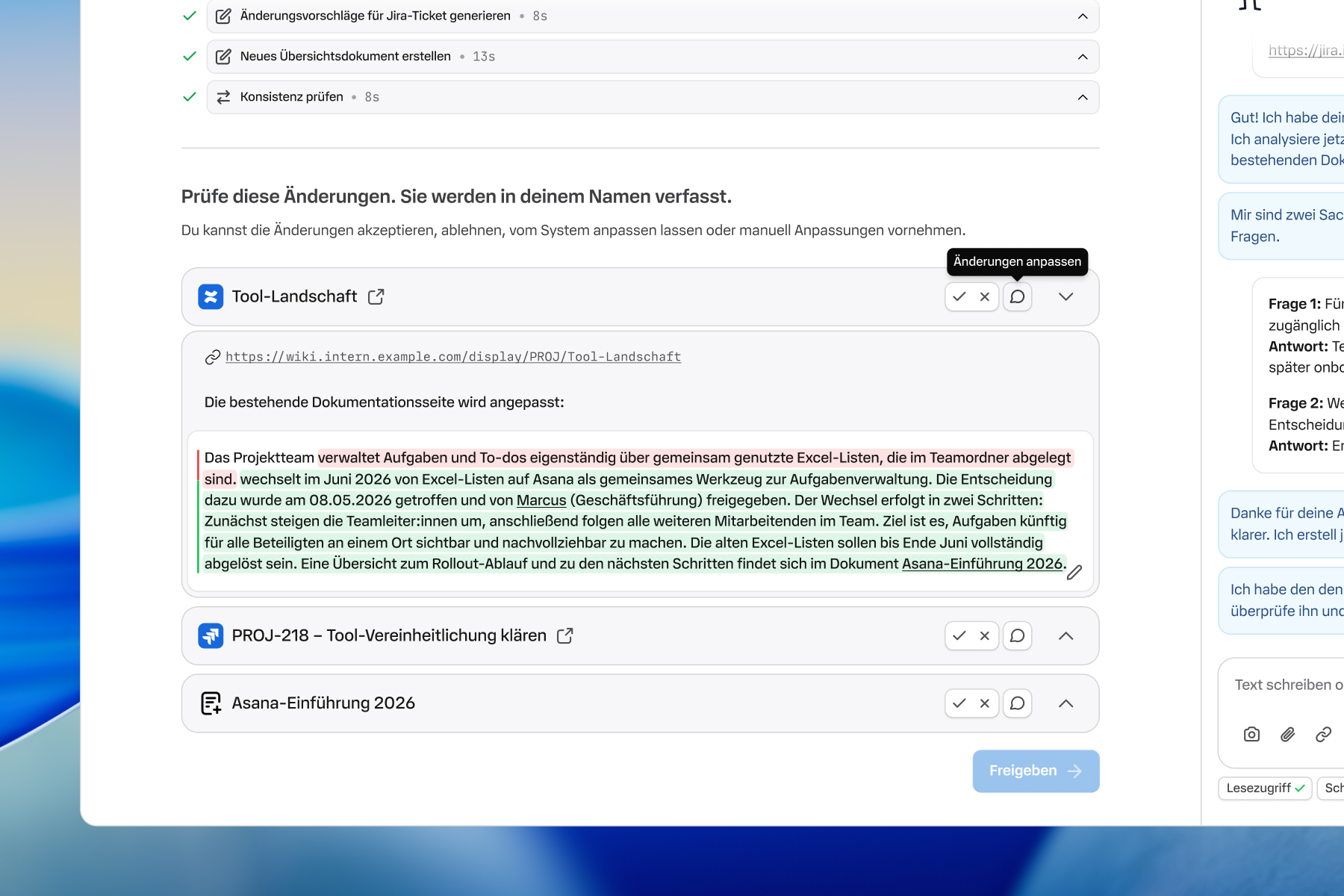
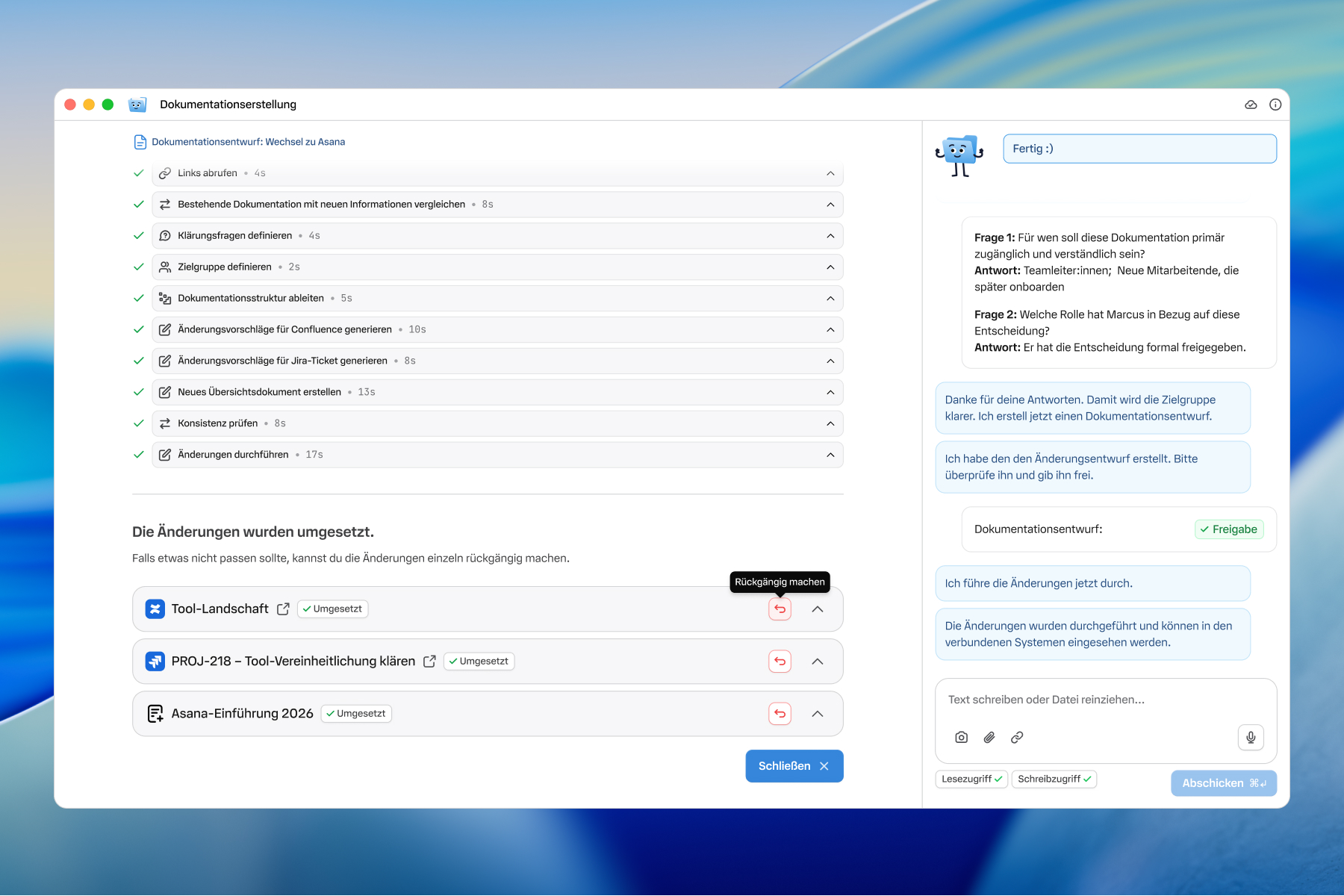
The AI writes, the human approves. This led to the central design decision: Memento adds friction on purpose. Every change has to be reviewed individually before it enters the knowledge base, so nobody approves suggestions without reading them.
Solution
Memento connects to tools like Confluence, Jira and GitHub and figures out on its own where new knowledge belongs. The core flow has six steps: Capture → Processing → (Clarification) → Draft → Review → Approval.
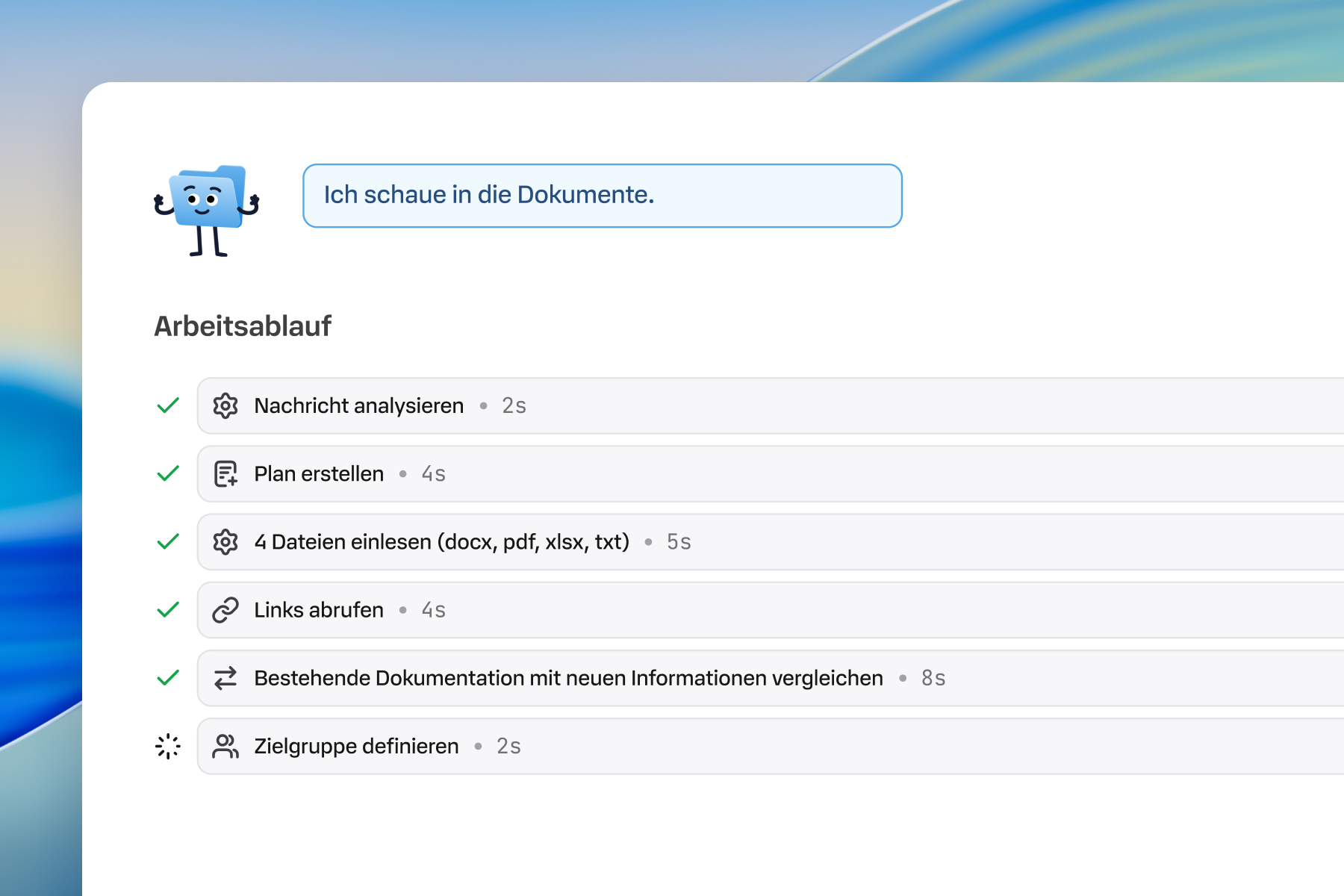
Users step in only at the handoffs. They enter their knowledge unstructured, as text, a voice recording, a file or a screenshot, and later review the finished draft at their own pace. In between, the system does the work and shows what it's doing at every step. It only asks follow-up questions when something is missing.
Results
I tested the prototype in moderated, scenario-based think-aloud sessions with five people from the target group, with two to eight years of work experience. The average SUS score was 92, which counts as "Best Imaginable" according to Bangor et al. With a sample this small, the result can't be generalized, but it is a strong indication. All participants felt sufficiently in control, and four out of five would use Memento in their daily work.
Because it actually shows in the documents what it changes, it feels highly trustworthy.
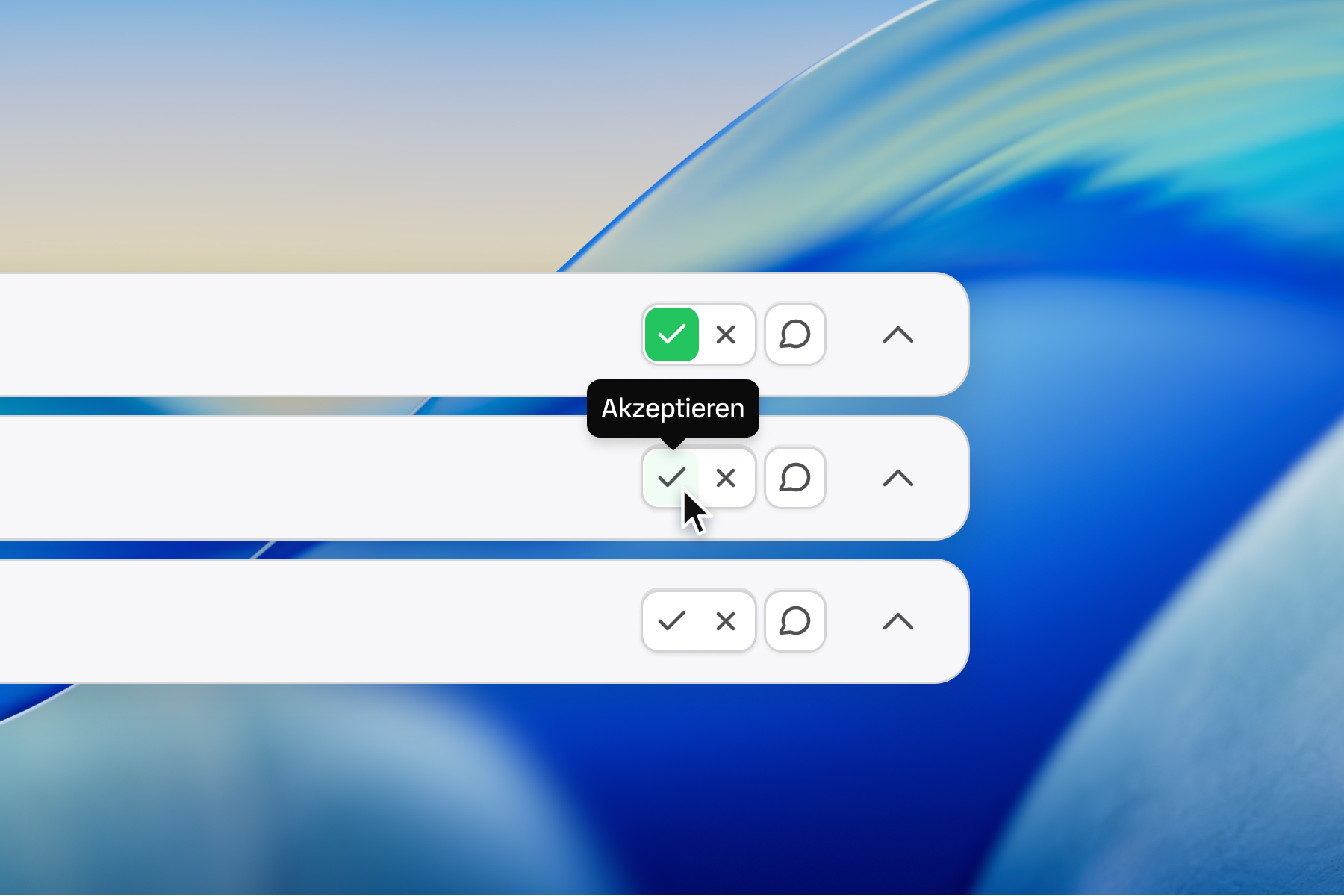
The test also showed where the concept falls short. Participants wanted finer control than the prototype offered: accepting, rejecting or editing each document individually, the way they know it from Git diffs or Codex. There were smaller hurdles as well, such as unclear input icons and a warning that stayed visible after the issue was resolved. From these findings, I derived six recommendations for the next iteration.
Learnings
Under time pressure, I committed to one design direction early. Looking back, I would test rough prototypes sooner instead of doing so much concept work before the first contact with users. The need for finer control would have surfaced earlier.